Bridging the gap between adaptation needs and investment
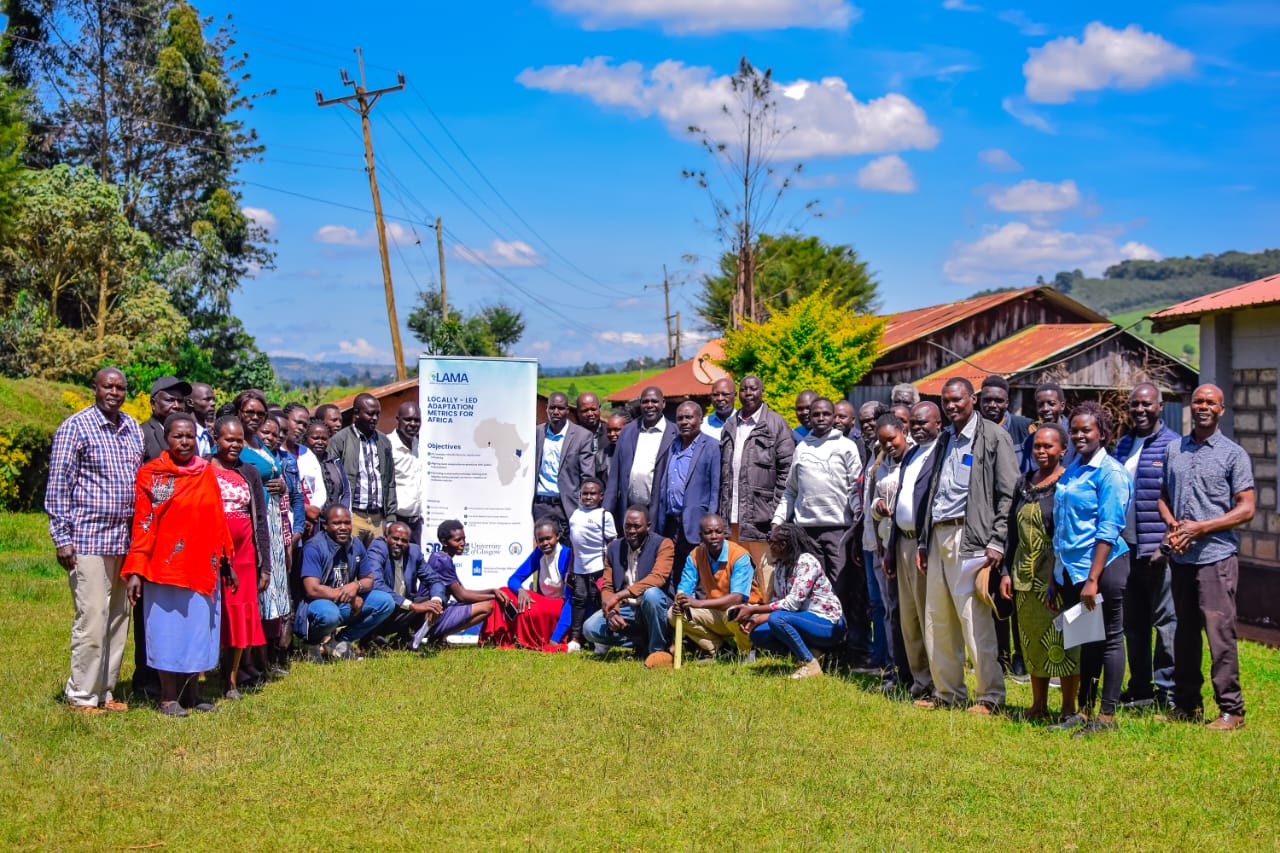
LAMA is an IDRC-funded programme building a shared platform for measuring, learning from and scaling locally led climate adaptation across Africa.
- Indicator records
- —
- Indicator records
- Adaptation projects
- 248
- Adaptation projects
- African countries
- 48
- African countries
- Expert advisors
- 10
- Expert advisors
Our aim
Co-develop indicators that capture how effective and inclusive adaptation is at community level.
Why LAMA exists
From scattered projects to shared evidence
- 01
The problem
Africa has hundreds of local climate adaptation projects, but they work in isolation. There is no shared way to measure what works, who it works for, or how much it costs.
- 02
The challenge
Funding decisions are made without community voices. Bottom-up indicators — those that reflect what vulnerable people actually need — are missing from frameworks like NAPs, NDCs and the GGA.
- 03
The solution
LAMA consolidates locally led adaptation data into one accessible platform, connecting community-level evidence to national and global policy so it is easier to track, fund and scale what works.
What the dashboard does
Four ways LAMA makes adaptation count
Equity and inclusivity
A space for dialogue and co-creation to map granular indicators as presented by vulnerable groups — metrics that are co-produced and strategic for measuring the distributional impact of climate change.
50% of 1.5B vulnerable people rely on farming
Demonstrate effectiveness
Captures already assessed adaptation solutions, while giving actors room to shape their initiatives to meet the principles for adaptation and LLA.
$50B annual adaptation funding target
Tracking and reporting
Tracks expenditures, reviews and integration with policy processes, with easy-to-access links between budget allocation and spending for the most vulnerable.
Budget tracking
Sharing and learning
A simple view of how indicators, sectors and budgets connect — bringing key adaptation information to local communities, women and young people across Africa.
One-stop shop for LLA resources
Our objectives
What we set out to do
Three objectives drive our work to advance locally led adaptation across Africa.
Capacity building
Expert support
Support African countries and researchers to develop adaptation indicators that capture local priorities in an inclusive way.
Knowledge sharing
Best practices
Share experiences and best practices in adaptation measurement among projects and initiatives working at the local level.
Framework development
Global alignment
Consolidate knowledge on adaptation metrics in Africa and align it with national and global frameworks such as NAPs, NDCs, the GGA and the GST.
Guiding our research
Key research questions
The questions behind LAMA’s work with small-scale farmers and vulnerable communities.
- 1
What are the priority adaptation needs and aspirations of small-scale farmers (SSFs) and their vulnerable groups at the local level?
- 2
What progress has been made in capturing the needs of SSFs in adaptation assessment, and what approaches can be used to capture these needs?
- 3
What metrics capture the aspirations of SSFs, including various gender groups, and how can these aspirations be enabled in adaptation interventions?
- 4
How can LLA metrics be aligned to national processes and gain traction in national adaptation planning and global adaptation assessment, rather than remaining project-level numbers?
SSFs = small-scale farmers · LLA = locally led adaptation
LAMA Platform Engaged in Kenya's National Climate Monitoring, Evaluation, Reporting & Learning Initiative
Kenya's Ministry of Environment, Climate Change, Natural Resources and Forestry (MECCF) has formed a landmark multi-partner initiative — co-led with SouthSouthNorth (SSN), the Climate and Development Knowledge Network (CDKN), and the World Resources Institute (WRI), with technical support from the African Group of Negotiators Expert Support (AGNES), and with the strategic engagement of the Africa Research and Impact Network (ARIN) through its Locally Led Adaptation Metrics for Africa (LAMA) Platform. Together, this coalition is co-developing a standardised indicators handbook and a digital Monitoring, Evaluation, Reporting, and Learning (MERL) tool — ultimately promoting greater transparency, accountability, and informed decision-making across Kenya's climate actions.
Key Deliverables
Initiative Partners
LAMA advisory group
Guided by African adaptation experts
Ten experts from the African Group of Negotiators, research, the private sector, government and local communities. They consolidate best practices and indicators, link local metrics to national and international frameworks, support the AGN’s contributions to the Global Goal on Adaptation, and inform IPCC assessments.
See the data behind LAMA
Explore adaptation indicators from global frameworks down to Kenyan counties, and the projects on the ground.